
Episode #24 What is Coaching

What is coaching? What sort of coaching should you choose? How does it work and how can it help you progress your career?

Let’s go back to basics.

In this podcast episode, I give you all the information you need to make an informed decision about whether coaching is for you and whether to join Imposter Syndrome Coaching or, if you’re a black or minority ethnic lawyer, Be The First Coaching.

I cover:

• What coaching is: an explanation of the listening and questioning technique that helps you get from where you are now to where you want to be.

• What coaching is not.

• Who coaching is for.

• How coaching works.

• The best conditions for coaching.

• The value of coaching: how is it worth the money?

• What to look for in a coach.

I also explain how Imposter Syndrome Coaching ticks all these boxes in a unique coaching programme tailored for lawyers with Imposter Syndrome who want to progress their career.

Choose Your Pathway

Be The First 1:1 Coaching

For Black law firm partners and senior leaders ready for bespoke, high-level strategic support.

Be The First Group Coaching

For mid to senior Black lawyers preparing for partnership and leadership.

Be The First Membership

For Black legal professionals at any stage addressing Imposter Syndrome and building the confidence to succeed at every level.

Ready to Apply This to Your Career?

Book a free 30-minute call and let’s talk about where you are in your career, what’s holding you back, and which programme is the right fit for you.

A focused, strategic conversation about your progression and what’s possible next.

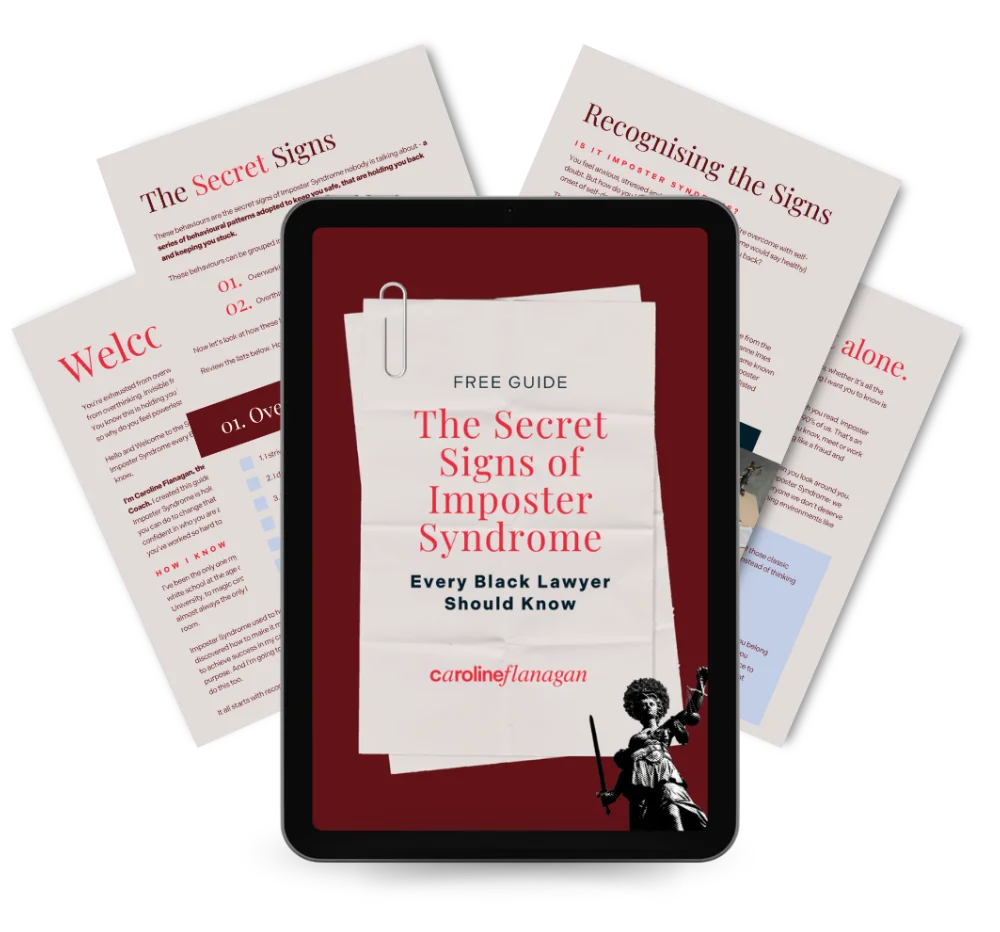
Free guide: The Secret Signs of Imposter Syndrome Every Black Lawyer Should Know – featured at the bottom of Podcast episode pages

Free Resource

The Secret Signs of Imposter Syndrome Every Black Lawyer Should Know

Discover the 60 behaviours quietly driving your overworking, overthinking, playing small, and self-sabotage – and finally understand why before they derail your day or career.

This guide is built specifically for Black lawyers, where these behaviours aren’t just about self-doubt. They’re also survival strategies you’ve developed in spaces where you’ve had to be twice as good to get half as far.