
Episode #109 Stop Overworking

I know, when it comes to your work, that long hours come with the territory. It’s the nature of the work you do. But are you sure that every single one of those hours is adding value to what you do?

In this episode, I talk about what I call Overworking – excessive working, driven by Imposter Syndrome (that feeling of not being enough), which adds little or no value and is causing you to work longer hours than you need to. The most obvious examples of this are perfectionism and procrastination.

Just like Overthinking (see episode 108), Overworking is responsible for the 4 key challenges you are struggling within your career:

  1. not enough time
  2. not performing to your potential
  3. not getting the recognition you deserve
  4. not enjoying your job (as much as you used to)

And, as with Overthinking, the solution for stopping Overworking is just one simple tool: your Imposter Speech.

Choose Your Pathway

Be The First 1:1 Coaching

For Black law firm partners and senior leaders ready for bespoke, high-level strategic support.

Be The First Group Coaching

For mid to senior Black lawyers preparing for partnership and leadership.

Be The First Membership

For Black legal professionals at any stage addressing Imposter Syndrome and building the confidence to succeed at every level.

Ready to Apply This to Your Career?

Book a free 30-minute call and let’s talk about where you are in your career, what’s holding you back, and which programme is the right fit for you.

A focused, strategic conversation about your progression and what’s possible next.

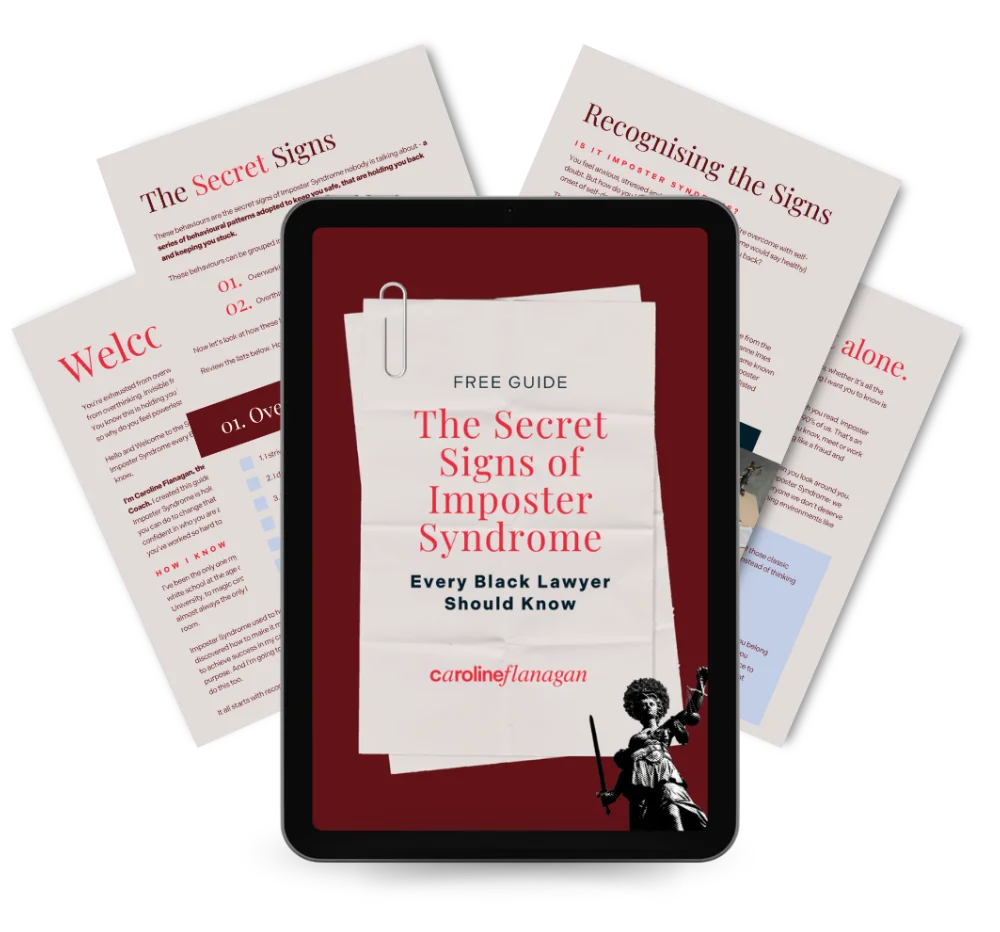
Free guide: The Secret Signs of Imposter Syndrome Every Black Lawyer Should Know – featured at the bottom of Podcast episode pages

Free Resource

The Secret Signs of Imposter Syndrome Every Black Lawyer Should Know

Discover the 60 behaviours quietly driving your overworking, overthinking, playing small, and self-sabotage – and finally understand why before they derail your day or career.

This guide is built specifically for Black lawyers, where these behaviours aren’t just about self-doubt. They’re also survival strategies you’ve developed in spaces where you’ve had to be twice as good to get half as far.