Episode #19: If You Don’t Ask, You Don’t Get

In this week’s episode, I talk about the importance of asking for what you want both at work and at home. If, like me, you worry about seeming too pushy or greedy or you’re just plain scared of being told ‘no’, then this episode is just for you. It’s time to put aside your timidity, shyness and fear of rejection and stop expecting others to know what you want and provide it in the form that you want it. It’s not their job to drive your life and career, it’s yours. If this fills you with dread, don’t worry. Asking is just another skill. Do it often enough and you’ll master it.

In this episode:

  • The gender pay gap has occurred for many reasons. Not asking for what you want is one of them
  • How to ask for what you want at work
  • How to ask for what you want at home
  • How a ‘no’ provides the ingredients for a future ‘yes’
  • Book: Women Don’t Ask by Linda Babcock and Sara Laschever
Choose Your Pathway

Be The First 1:1 Coaching

For Black law firm partners and senior leaders ready for bespoke, high-level strategic support.

Be The First Group Coaching

For mid to senior Black lawyers preparing for partnership and leadership.

Be The First Membership

For Black legal professionals at any stage addressing Imposter Syndrome and building the confidence to succeed at every level.

Ready to Apply This to Your Career?

Book a free 30-minute call and let’s talk about where you are in your career, what’s holding you back, and which programme is the right fit for you.

A focused, strategic conversation about your progression and what’s possible next.

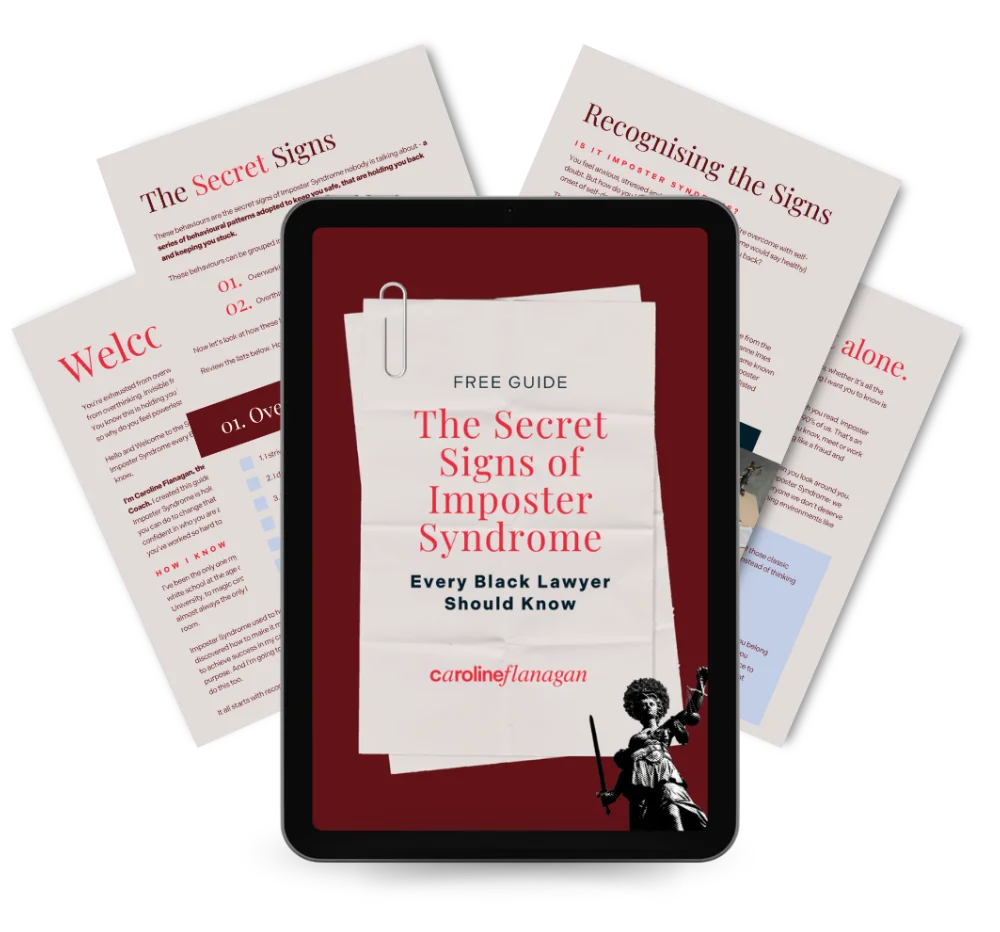
Free guide: The Secret Signs of Imposter Syndrome Every Black Lawyer Should Know – featured at the bottom of Podcast episode pages

Free Resource

The Secret Signs of Imposter Syndrome Every Black Lawyer Should Know

Discover the 60 behaviours quietly driving your overworking, overthinking, playing small, and self-sabotage – and finally understand why before they derail your day or career.

This guide is built specifically for Black lawyers, where these behaviours aren’t just about self-doubt. They’re also survival strategies you’ve developed in spaces where you’ve had to be twice as good to get half as far.